Share:


These days, few people haven’t heard of climate change, and it is generally seen in a negative light. However, there are some hypotheses that view it in a different way, even suggesting it could be a good thing or an urgent necessity. Today, we’ll explore "global greening"—a phenomenon that offers an alternative perspective on this well-known issue.
Let’s clarify the facts once again: Yes, the Earth’s temperature is rising. According to data from the World Meteorological Organization (WMO), the average temperature for 2024 is the highest in recorded history, sitting at 1.55°C above the 1850-1900 average. When we look at the average temperature over the past decade, we see that each decade since the mid-20th century has consistently been warmer than the previous one.
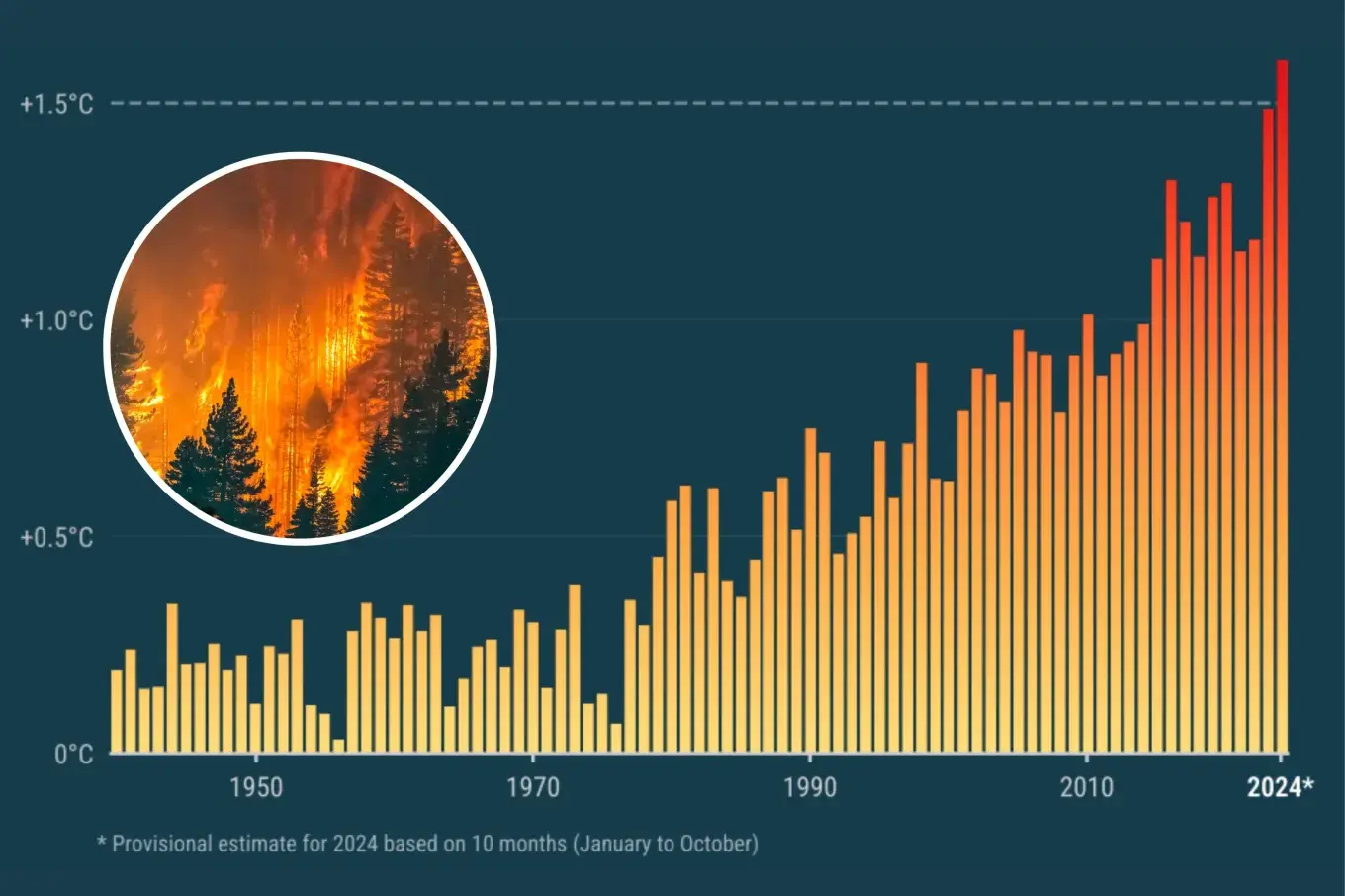
Increasing deviation of average annual temperatures on Earth from the baseline. Source: Copernicus Climate Change Service /ECMWF/Data source: ERA5 / ISTOCK / GETTY IMAGES PLUS
Most scientists agree that this warming is mainly caused by an increase in greenhouse gases in the atmosphere, largely due to human activities. Carbon dioxide (CO2) is the biggest contributor, but methane, ozone, and nitrogen oxide also play significant roles.
It’s undeniable that climate change is happening. In addition to rising temperatures, there’s a redistribution of precipitation patterns, and the frequency of extreme weather events is increasing. However, the causes and consequences of these changes are still open to debate. While we typically observe mostly negative outcomes, we also need to consider alternative viewpoints.
Back in the mid-20th century, as climate change was just beginning to be discussed, Soviet climatologist M. Budyko, who studied changes in Earth’s heat balance, offered an unusual perspective on the issue. He started by estimating the concentration of carbon dioxide in the Earth’s atmosphere throughout its entire history.
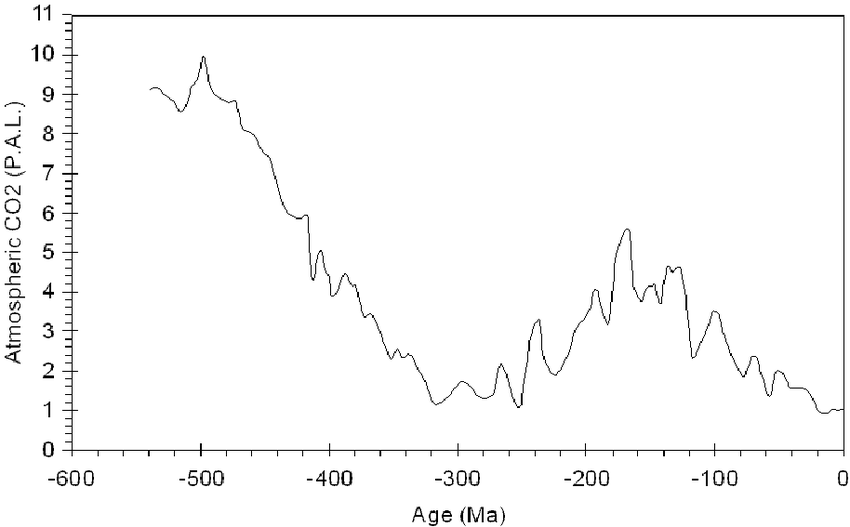
Changes in CO2 levels over the last 500 million years. Source: ResearchGate
Volcanic activity is the primary source of CO2, and as the planet ages, this activity gradually decreases. However, the removal of CO2 from the atmosphere (through burial in sediment) has remained relatively stable. As a result, CO2 levels have fluctuated over time, but the long-term trend has been a decline. Since CO2 is closely linked to temperature, this also means that Earth’s temperature has generally decreased over time.
Over the last 500 million years, Earth has experienced both much warmer and colder climates. For example, temperatures were around 25°C higher during some periods, while ice ages brought temperatures about 10°C lower. Interestingly, the periods of greatest biodiversity on Earth occurred when CO2 levels and temperatures were higher, while periods of decline in these factors led to the suppression of vegetation and animal life.
According to Budyko’s theory, rising CO2 concentrations are more of a benefit than a curse. Increased CO2 should lead to more plant growth, greater biodiversity, and could transform Earth into a "green paradise«—much like the fictional world of Dune In fact, Budyko argued that if CO2 levels were to drop below a certain threshold, plants would be unable to perform photosynthesis, leading to a global catastrophe. In this sense, climate warming may be almost necessary for preserving life on Earth as we know it.
That’s not the whole story. In recent years, several studies based on satellite images have analyzed the Earth’s surface to estimate how much «greenness» has increased over time. It turns out that the planet is indeed becoming greener! Over the last 20 years, the amount of green has increased by 5%, which is significant. This phenomenon, called «global greening», could mean the following:
Even the oceans are greening, as the number of photosynthetic organisms in marine environments is on the rise.
Could this greening be due to increased CO2 concentrations? And is this greening always a good thing?
Unfortunately, this is where the «rose-colored glasses» begin to come off. A closer examination of the global greening and the rise in temperatures reveals two major problems:
First, when we look at satellite images in more detail, we see that much of the new greenery is not made up of virgin forests or flourishing natural ecosystems, but rather crop fields. To make room for agriculture, forests are being cleared, leading to the destruction of ecosystems, the use of harmful chemicals, and the degradation of soil. Although we often associate green with life and ecology, in this case, both are suffering.
Second, rising CO2 levels and temperatures bring about many complex consequences. Melting ice, forest fires, heatwaves, and coastal flooding are already causing significant harm to ecosystems and people. In the grand scheme of things, the increase in greening is unlikely to compensate for these negative effects.
Does this mean that the global greening hypothesis and Budyko’s theory are wrong? Not necessarily. It simply means that climate change is a much more complex process than we had initially realized. Human impact on nature has reached unprecedented levels, and this is becoming increasingly visible through satellite imagery.
You might think that global greening is something you can’t observe with your own eyes, but there are places where you can actually see it! For example, Antarctica.
Antarctica was once a green continent, full of trees and animals. However, about 34 million years ago, as CO2 levels dropped and the climate cooled, it became ice-covered and almost lifeless.
But now, we’re seeing a return of life. Satellite images show that the area of greening in Antarctica has increased tenfold over the past 40 years. Mosses and other plants are appearing in places where nothing grew before. The icy shores of Antarctica are slowly coming back to life. This development is both fascinating and alarming.
Cover foto: Iswanto Arif / Unsplash